
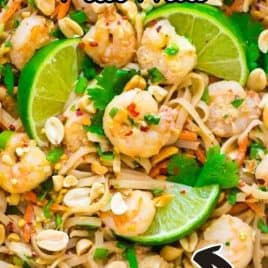
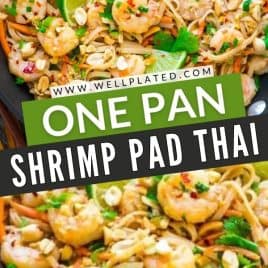
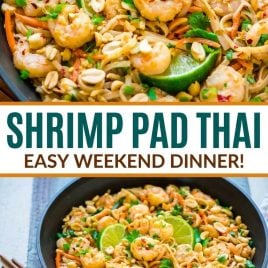
This easy, light recipe for healthy Shrimp Pad Thai is simple and filling. You can find all the ingredients you need to make it in a standard grocery store, and if you apply a little hustle, the entire dish can be ready in 15 minutes flat.

5 Star Review
“This recipe is absolutely delicious!! I will be making this again very soon! The flavors all came together so nicely. Yum!”
— Morgan —
This recipe will forever transport me back to my multi-week journey through Thailand and Vietnam with Ben. It was the trip of a lifetime.
Thailand had always been a country on my bucket list.
It’s a place of gorgeous scenery, warm hospitality, and, of course, epic food (this Vegetarian Pad Thai is another dish inspired by my travels).
Pad Thai is a recipe that saved us many times on our travels (being a tourist really works up an appetite), and this healthy shrimp pad Thai recipe has saved dinnertime on more than one occasion stateside.

I personally think this is the BEST shrimp pad Thai recipe because:
- It’s a better-than-takeout recipe that’s also better for you. Gluten-free, reduced sodium, and LOADED with succulent shrimp and veggies, this is shrimp pad Thai on the lighter side.
- It’s easy to prep, requiring only a single pan and a sharp knife for chopping.
- It’s quick to cook. Homemade pad Thai on your table in 15 minutes? Yes, please!
Serve it as is, with a side of Air Fryer Tofu or Chicken Satay with Peanut Dipping Sauce as an appetizer.

How to Make Healthy Shrimp Pad Thai
This healthy shrimp pad Thai recipe can be on your table faster than delivery and be much kinder to your body too.
Full of outstanding flavor and with leftovers that reheat like a dream, this recipe will quickly become a family favorite. (Massaman Curry and Panang Curry are other family favorites in the making.)
The Ingredients
- Shrimp. Peeled and deveined medium or large shrimp make prepping this recipe a breeze. Use fresh or thawed frozen shrimp and pat them dry. (This Garlic Shrimp Pasta is another frozen shrimp favorite!)
- Rice Noodles. While rice noodles are authentic in shrimp pad thai, you could also opt for shrimp pad thai with ramen noodles if you don’t need this dish to be gluten free.
- Eggs. Pad Thai isn’t the same without a little scrambled egg stirred into the noodles.
- Bean Sprouts + Carrots. Add awesome crunchy flavor and extra nutrition to the dish.
- Green Onions + Garlic. Contribute another layer of flavor and depth to this Thai-inspired recipe.
- Peanuts. Pad Thai’s perfect partner for crunch, added saltiness, and delightfully subtle peanut flavor. (They’re also a tasty way to garnish this Slow Cooker Thai Peanut Chicken.)
- Cilantro + Lime. Give the dish color, freshness, and some acidity to balance the salty fish sauce and soy sauce.
- Rice Vinegar. A mild, lightly sweet vinegar, this is an affordable Asian ingredient that’s a game-changer when it comes to recreating that takeout flavor.
- Fish Sauce. Essential for an authentic pad Thai sauce. It does NOT taste like fish and is widely available.
- Soy Sauce. Check your labels carefully if you want to make shrimp pad Thai gluten free since both condiments traditionally contain gluten. For the soy sauce, opt for tamari which is usually right next to the soy sauce in the Asian food aisle.
- Ground Chili Sauce. Also called sambal oelek. A different hot sauce such as Sriracha or red pepper flakes could be substituted if you don’t keep garlic chili sauce in your pantry.
- Honey. For a touch of sweetness that balances and marries all the flavors together. Traditional pad Thai calls for palm sugar, but honey works nicely as an everyday swap.

The Directions
- Cook the rice noodles, drain and rinse. Whisk together the sauce ingredients.
- In a wok, saute the shrimp until pink, add the garlic, and toss in the cooked noodles.
- Push the contents of the wok to one side, then scramble the eggs on the empty side. Add the sauce and stir everything together.
- Sprinkle with peanuts and cilantro, then serve warm with lime wedges. ENJOY!
TIP!
Seriously, don’t skip the lime wedges. There’s something about a squeeze of fresh lime juice that makes homemade pad Thai taste like it came straight from your favorite Thai restaurant.
Storage Tips
- To Store. Store leftovers in an airtight container in the refrigerator for 3-4 days.
- To Reheat. Reheat gently in the microwave with a few tablespoons of water or chicken broth to keep the noodles from drying out.
What to Serve with Shrimp Pad Thai


No need to book a plane ticket.
This healthy shrimp pad Thai is all you need for a one-way virtual trip!
Frequently Asked Questions
Fish sauce is a traditional Asian condiment made from fermented fish or krill. It has an intense, concentrated flavor reminiscent of the salty sea. A little bit goes a long way and takes any Thai recipe (e.g., Chickpea Curry) to the next level.
In my opinion, nothing can truly replicate the taste and aroma of fish sauce. However, you may swap for additional soy sauce if you cannot find it at your local store or do not wish to purchase an entire bottle. Other possible swaps include oyster sauce, coconut aminos, tamari, or Worcestershire sauce (but really, if you like Thai food, pick up a bottle of fish sauce!).
Yes! If you prefer to make this pad Thai recipe with chicken, swap the shrimp for bite-sized chicken pieces. You will want to follow the instructions, cooking the chicken for several extra minutes before adding the noodles and garlic to ensure it is fully cooked.
Shrimp and chicken are perhaps the most common and authentic meats in pad Thai. However, you’ll also see pad Thai noodles made with extra firm tofu as a pad Thai option with vegetarian protein.

Shrimp Pad Thai
Email Me the Recipe!
From time to time, we’ll send you Well Plated emails. You can unsubscribe anytime. Have an account? Log In.
Ingredients
For the Pad Thai Stir-Fry:
- 4 ounces dry brown rice noodles
- 2 teaspoons extra virgin olive oil or canola oil
- 8 ounces medium or large shrimp peeled and deveined (you can use either fresh shrimp or thawed frozen shrimp—if using thawed, lightly pat the shrimp dry prior to cooking)
- 2 cloves garlic minced
- 3 large eggs
- ½ cup bean sprouts* (see note)
- ½ cup freshly grated carrots
- 2 large green onions (or 3 small) finely chopped
- ¼ cup peanuts finely chopped
- ¼ cup fresh cilantro chopped
- Lime wedges for serving
For the Sauce:
- 2 tablespoons fish sauce** gluten free if needed (see note)
- 1 ½ tablespoons rice vinegar (I used seasoned)
- 1 tablespoon low-sodium soy sauce or tamari for gluten free
- 2 tablespoons water
- 1 tablespoon honey plus additional 1-2 teaspoons to taste
- 1-3 teaspoons ground chile sauce (sambal oelek) or chili garlic sauce
Instructions
- Cook the rice noodles according to package instructions. They should be soft but not mushy. Drain and rinse under cool water.
- In a small bowl, whisk together the sauce ingredients: fish sauce, rice vinegar, soy sauce, water, 1 tablespoon honey, and 1 teaspoon chili garlic sauce. If you prefer a sweeter pad thai, add additional honey (or even a little brown sugar). For spicier, add additional chili paste.
- Heat the oil in a large non-stick skillet or wok over medium-high heat. Add the shrimp and saute just until the shrimp begins to turn pink, about 2 minutes. Add the garlic and noodles. Stir continuously to coat the noodles and shrimp with the garlic, then push the ingredients in the skillet over to one side of the pan.
- Crack the eggs into the empty side of the skillet. Break apart the yolk with the spatula and let cook for 30 seconds, until just beginning to set. Stir the egg in with the noodles. Stir in the sauce.
- Add the bean sprouts, carrots, and chopped green onions and let cook until the bean sprouts are crisp-tender, about 1 minute. Sprinkle on the peanuts and cilantro. Serve immediately with lime wedges.
Notes
- TO STORE: Keep leftovers in an airtight container in the refrigerator for 3-4 days.
- TO REHEAT: Warm gently in the microwave with a splash of water or chicken broth to keep the noodles from drying out.
- *If you cannot find fresh bean sprouts (my grocery only carries them sporadically), you can swap rinsed, canned bean sprouts (available in the Asian foods section of many grocery stores) or substitute another fresh vegetable of your choice. The canned bean sprouts have a more fermented taste, so if this bothers you, I would recommend omitting them.
- **Fish sauce is available in the Asian food section of most grocery stores. I HIGHLY recommend using it, as it adds important saltiness and irreplaceable Thai flavor to the dish. If you must make a substitution, use additional low-sodium soy sauce.





No comments (yet). Help our readers and give a thumbs up to any comment you found helpful!